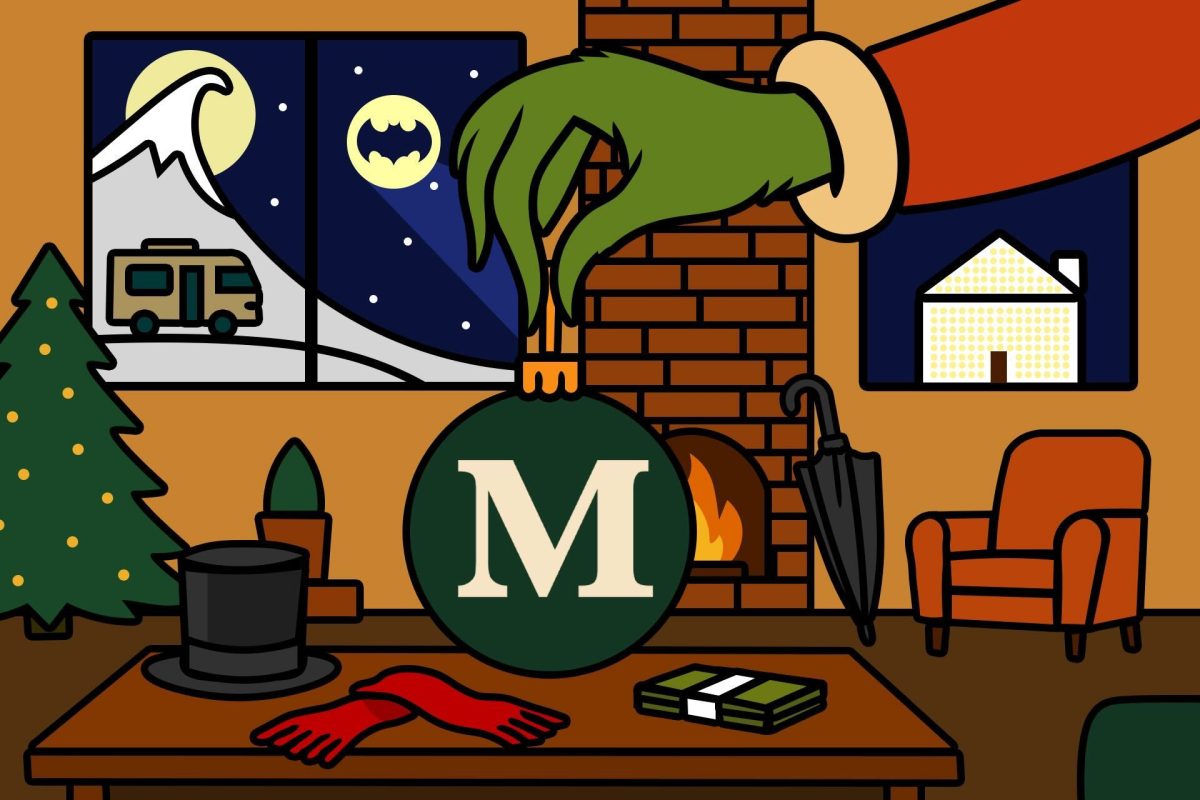
Truthfully, I’ve never been a fan of Christmas movies, or even the holiday itself. Somewhere between the forced cheer and the saccharine soundtracks, I usually tap out in early December. I never understood the obsession with “Elf,” and when I see “A Christmas Story” pop up for its annual 24-hour cable hostage situation, my body releases an annoyed sigh.
If I’m going to sit through a holiday movie, I need it to admit that December is unhinged. However, buried under tinsel and expectations, there are a few movies I’ll defend loudly.
Scrooged
First up is “Scrooged,” a film for people who do not believe in Christmas movies. It’s cynical, a little mean, uncomfortably corporate and allergic to sentimentality until the very last second. Watching Bill Murray stumble through unpaid emotional debt feels like a wellness check for anyone who has ever hated December before it even started. “Scrooged” is a holiday movie that doesn’t pretend everything is magically fixed because someone learned a lesson. It suggests redemption isn’t a miracle; it’s a messy negotiation with reality.
National Lampoon’s Christmas Vacation
Then there’s “National Lampoon’s Christmas Vacation,” which has been quoted in my family for decades like gospel. The older I get, the more I relate to Clark Griswold: sarcastic, exhausted and stubbornly clinging to the idea that if I get everything right, maybe the chaos will quiet down.
His eventual breakdown, after spending the whole movie pretending the holiday is a beautiful lie, is hilarious, but also a quiet confession. It’s not that Griswold loves the holiday; he’s chasing the feeling he thought it promised.
Batman Returns
People side-eye me when I say “Batman Returns” is a Christmas movie. Let’s be serious, — if people can argue that “Die Hard” is a Christmas movie, then Tim Burton’s snow-drenched Gotham absolutely qualifies.
This becomes especially apparent when you consider that Danny DeVito’s Penguin is literally abandoned on Christmas, and Christopher Walken is playing pure capitalism in a wig as the villainous Max Schreck.
The film is dark, ugly and uncomfortable, which is how the holidays can feel when scratched beneath the surface. Under Burton’s lens, Christmas is cold and morally complicated. Somehow, that makes it more honest.
The Nightmare Before Christmas
Tied to that same frequency is “The Nightmare Before Christmas,” a Burton film that I’ve loved since I first watched it. The film is technically a Christmas movie, but it’s really about an identity crisis and biting off more than you can chew. The aching desire for reinvention is a yearly feeling, not a personality flaw.
How the Grinch Stole Christmas
Then there’s the crown jewel: “How the Grinch Stole Christmas.” Every year, no matter how much I pretend I’m above it, I put on the 2000s classic. Admittedly, I’ve seen the movie so many times that I can pinpoint the exact moment when the makeup department forgets The Grinch’s yellow colored contacts, and Jim Carrey’s real brown eyes give him away. The heartfelt comedy also has my favorite behind-the-scenes fact: Producer Brian Grazer brought in a CIA expert who trains agents to withstand torture to help Carrey undergo the makeup process. A Christmas movie so intense it required government involvement? Take that, “Die Hard.”
Although it’s far from perfect, to me, it’s the best Christmas movie. The real story isn’t about the commercialized holiday; instead, it shows The Grinch being ostracized for how he looks by a community that claims to be all about love. The Grinch loses his mind because Whoville never let him belong.
So maybe I don’t hate Christmas movies — perhaps I just can’t get behind their forced holiday propaganda. I hate the lie that joy is mandatory and grief is inconvenient. The movies I love understand the truth instead: December is strange, people are tired and the air is sharp.