Mizzou Racing president Justin Bowers recalled the intensity of driving the team’s student-built racecar during his sophomore year.
“I would say the best description I’ve heard of driving one of these cars is a roller coaster that you can control,” Bowers said.
Officially designated as Mizzou Racing Formula SAE, the student-led organization is part of an international engineering competition hosted by the Society of Automotive Engineers. Each year, teams at an international level are challenged to design and build a custom racecar through the end of spring according to a standardized rulebook.
The University of Missouri’s organization builds most of the vehicles itself. This includes mechanical hardware and software such as control or communication systems. Any materials or parts the team cannot build by hand are funded by the College of Engineering or sponsored by brands such as Boeing, Petro and Prodezigns.
For many students, joining the team can be intimidating. Anshu Giliyaru, the electric vehicle systems lead, said he felt overwhelmed when he first joined as a first-year student. After being a part of the team for two years, Giliyaru’s perspective changed.
“If you’re willing to come in and learn, you know, the design aspect, that’s fantastic,” Giliyaru said. “And the same thing with the manufacturing … it’s not about how much skill you have. Manufacturing is about how much patience you have to, you know, get the project made.”
Team members come from and collaborate with a large range of STEM majors, including mathematics, electrical engineering and computer science. Each subteam is responsible for creating a specific component on the racecar. Some deal with circuit boards while others are directly involved with larger mechanical engineering.
Subteams directly influence each other, often having to communicate with different branches to make trade-offs that optimize speed and durability of the final product.
With so many different elements contributing to the final project, the team gets exclusive access to specific resources.
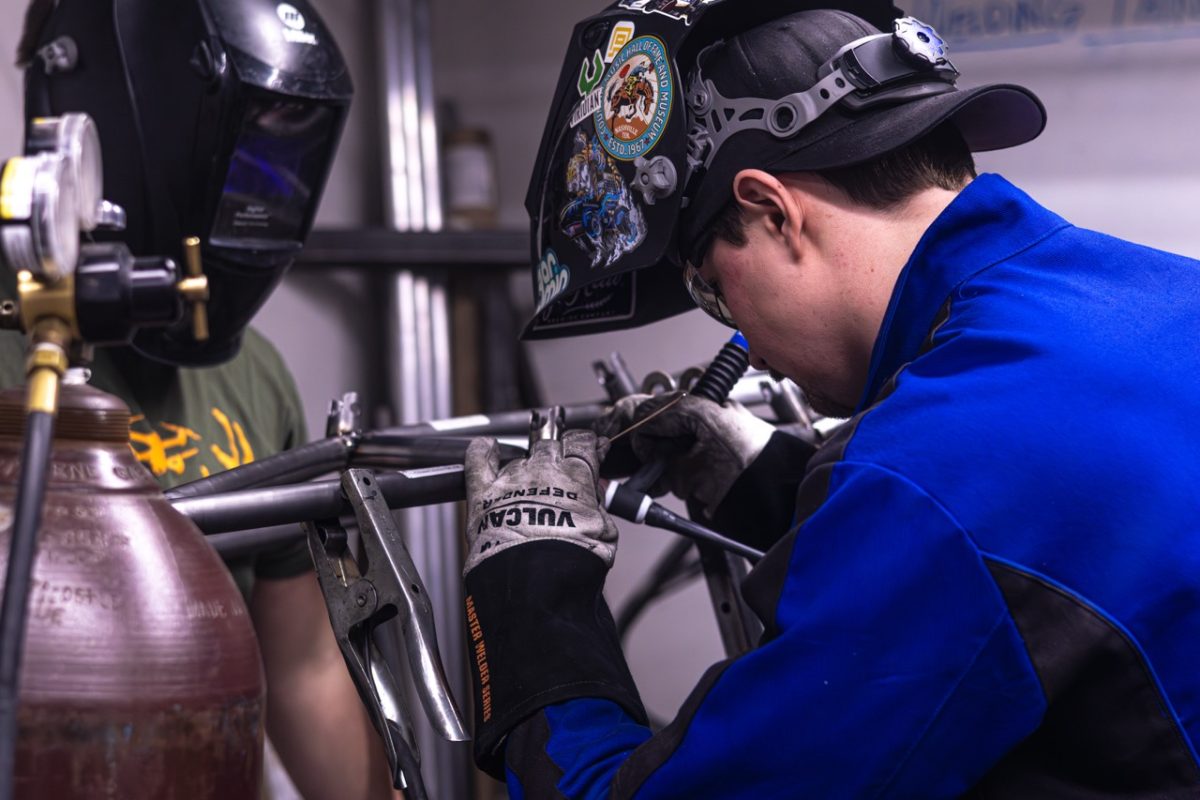
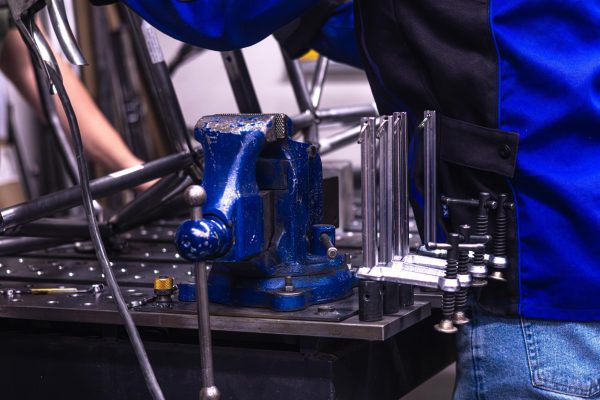
“We do a lot of welding and metal work,” Bowers said. “So that’s something you don’t do in class, which is a really useful skill to have and understand as a mechanical engineer particularly. Then we also do a lot of composites work and carbon fiber and fiberglass work. That’s something that I really wouldn’t get a chance to do anywhere else. It’s very, very expensive to work with.”
This special privilege pushes students beyond classroom theory and into real-world problem- solving and practicality. While STEM courses often focus on schematics, designs and abstract concepts, applying those ideas into a functioning vehicle is an entirely different process.
“Whenever you take those drawings, and you need to put it into real life, into an actual design, that is a skill that I’ve only been taught from upper classmen on the team,” Giliyaru said. “And then on top of that, whenever you get that board, make it and then put it in the car and see if that circuit board actually works or not. That is team exclusive.”
Mizzou Racing allows students to experiment with unfamiliar, expensive technology and discover their interests in engineering.
“I actually came in this team as a mechanical engineer so I figured out what I wanted to do on the team by participating in events on the team,” Giliyaru said. “I saw a senior designing a circuit board. I was like, ‘what is that?’ Because I was a mechanical engineer. And he introduced me to it. (And) I was like, I think I want to be an electrical engineer.”
Formula SAE is a rare space where classroom theory and real-world engineering merge.
Many participants are STEM majors balancing the demands of Formula SAE alongside rigorous coursework and personal commitments. Some go as far as to take exams earlier than needed to accommodate the national competition schedule.
Ultimately, the drive for competition keeps members returning year after year, pulling everyone’s focus together.
“We want to outperform a lot of other universities out there, and so that is one thing that will always keep some of us, on a team awake at night, is the thrill of the competition,” Giliyaru said.
In May, the team and its racecar will compete on the Michigan International Speedway in Brooklyn, Michigan.