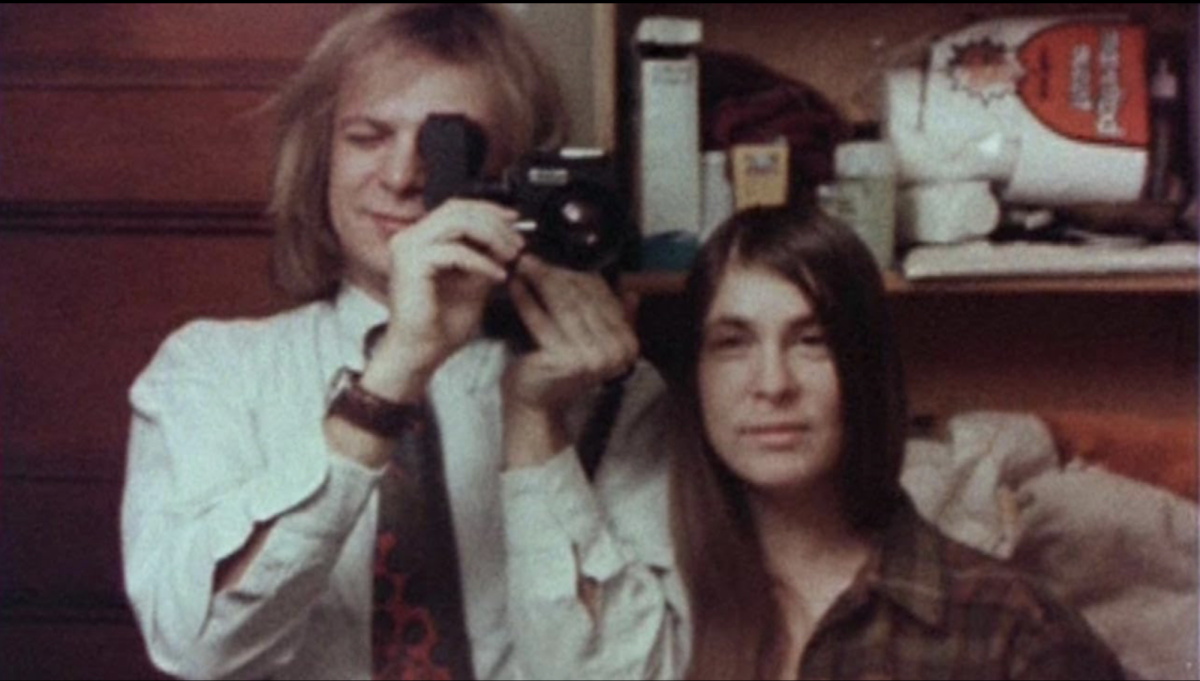
Though revolutionary when released in the ‘80s, “Diaries” is past its prime. Running at nearly three and a half hours, Ed Pincus’ “Diaries” felt like an overindulgent exploration of one man’s life, filled to the brim with random details from his bare penis to constant conversation about his open relationship with his wife.
There’s no question that Pincus was an influential figure in the field of personal documentary, co-founding the Massachusetts Institute of Technology’s Film Section and inspiring many documentarians. Filmmaker Ross McElwee was one of Pincus’ graduate students in the ‘70s, and his documentaries “Remake” and “Sherman’s March” both played at this year’s True/False Film Fest. Both films used the personal narrative documentary style that Pincus pioneered. As the 2026 True Vision Award Winner, McElwee presented “Diaries” as a film that influenced his filmmaking.
From 1971 to 1976, Pincus filmed his life and edited the footage into what became “Diaries.” Pincus showed the minute details of daily life like doctor’s visits, road trips and love affairs, but without meaningful reactions or self-reflection on Pincus’ part, the viewer lacked a sense of him as a person.
The film sought to question if the feminist rallying cry “The personal is political” could apply to his own life, but Pincus seems to hide behind the camera. He makes the film a kaleidoscope of the people around him, while having very little to do with anything personal to him.
His insistence on staying behind the camera and staying quiet worked to the film’s detriment. The condemning words of his wife, the screams of his children and the excessive nudity felt raw but impersonal.
Watching the documentary felt like an invasion, as Pincus’ family regularly expressed their discomfort at being filmed. At the beginning of the documentary, Pincus’ wife, Jane, said she feels judged and invaded, and his young kids express growing discomfort with the filming as they grow up.
Conversations are the backbone of this film, but Pincus brushes off most of the emotions expressed to him. Through discussions of gender roles and what the elusive concept of “space” should look like in a marriage, Pincus is rarely in the camera’s focus.
“Diaries” started promisingly, showing a seemingly happy family dynamic in a home video style that made the whole film feel like real life. However, as these close-up shots showed family conflicts and self-critique, his deflection and inability to resolve these problems made his personal challenges feel avoidable and self-inflicted rather than thought-provoking.
Despite its reputation, only about 30 people attended the showing of “Diaries” at T/F, and by the two-hour-and-30-minute mark, half the audience had left. The slow pacing and seemingly unrelated collections of close-ups, nature footage and scenes of Jane showering made the three and a half hours feel like five.
The most frustrating part of the film is the lack of change. They get a dog. They move to Vermont. They all grow five years older. But at the end of the personal narrative, Pincus is still a mystery: just the man behind the camera.
You can keep up with The Maneater’s 2026 True/False Film Fest coverage here.