Between Oct. 10 and Dec. 8 of last year, Data & Investigation reporters at The Maneater surveyed 307 Mizzou students about their thoughts on campus safety. Their findings are below.
According to polling conducted by The Maneater, a vast majority of students report feeling safe on campus, but students are divided over the University of Missouri’s handling of campus safety.
Around 96% of students polled said they feel safe on campus, with just under 4% saying they feel unsafe. However, the poll found that students’ perception of safety shifts greatly between the day and the night.
Students were asked to rate how safe they feel on campus during both daytime and nighttime hours on a scale from one to five, with five being the safest and one being the least safe. For daytime hours, a majority of students (73%) gave a rating of five. Around 24% of students gave a rating of four. Just over 2% gave a rating of three, and less than 1% gave a rating of two. Out of all students polled, 0% gave a rating of one.
At night, the percentage of students who gave a safety rating of five plummets to only 19%. A plurality of students (38%) gave a rating of four, and around 30% gave a rating of three. Just under 11% gave a rating of two, and around 2% gave a rating of one out of five.
Despite a widespread feeling of safety on campus, 33% of students said they approve of the university’s handling of campus safety, while 41% said they feel neutral. Overall, more students approve than disapprove of Mizzou’s handling, with 26% saying they disapprove.
Almost all students (95%) say they have never been a victim of a crime that occurred on campus, while 5% report having been a victim of on-campus crime at some point.
Student Testimony
Natalie Hendren, a junior studying digital storytelling, is part of the 96% of students who report feeling safe on campus. Hendren has been on campus for three years, and, she says her time at Mizzou has given her a feeling of security.
“I’m not afraid of crime here on campus or anything, just from the experiences that I’ve had,” Hendren said.
Hendren said she approves of how the university handles campus safety, and noted some of the things provided by the university that make it feel like a safer place to be.
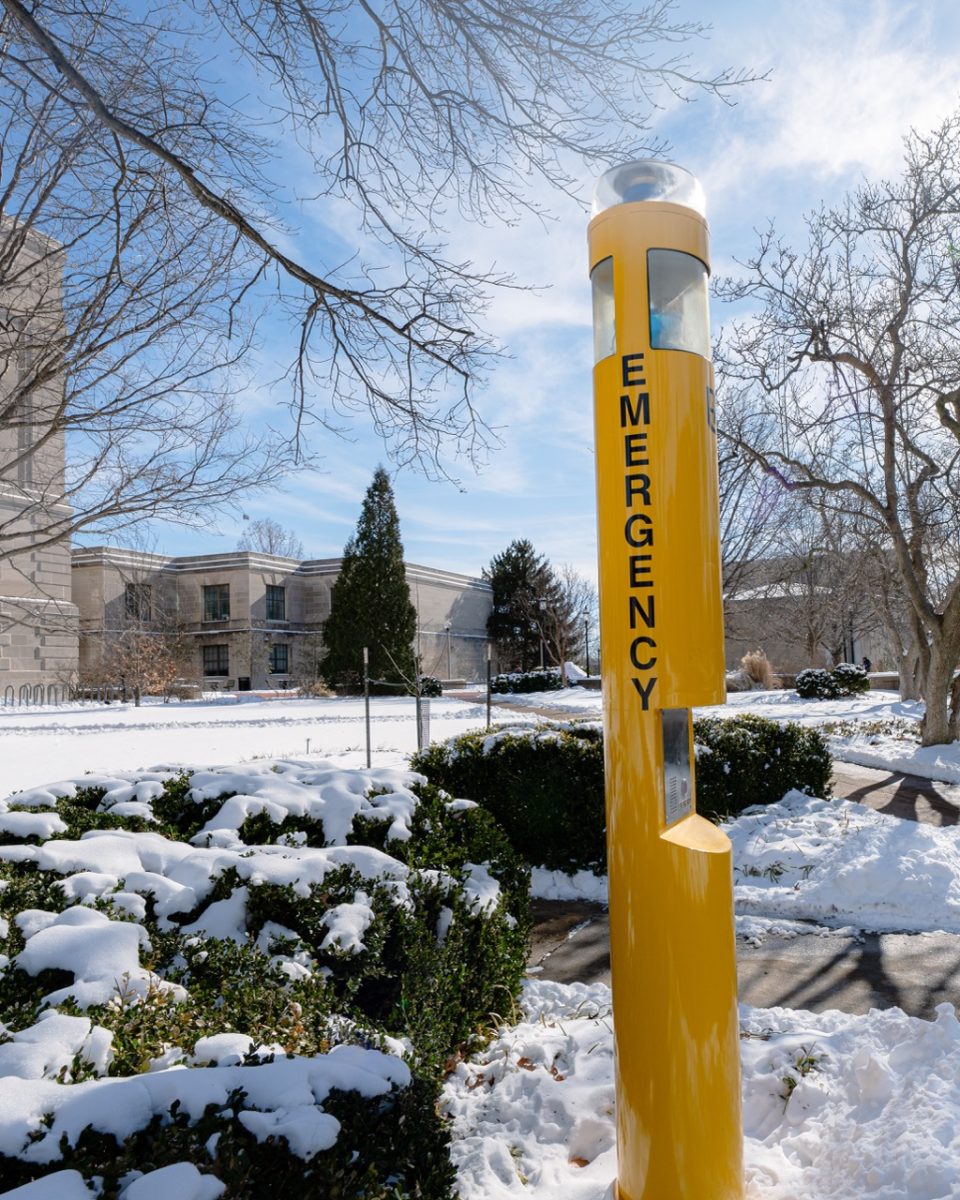
“I spent a lot of time on campus, and I know that there are ways to be safer,” she said. “There are the emergency poles and things like that that make me feel more comfortable and phone charging stations that make me feel like I have access to calling for help.
However, not all students agree with how the university handles safety. Tanner Riley, a junior studying journalism, takes issue with the university’s recent push for local leaders to crackdown on crime, which he felt prominently targeted unhoused individuals.
“The university’s villainization of the homeless population downtown sends a really bad message in relation to their opinion on safety,” Riley said.
Following a 2025 shooting downtown that resulted in the death of Stephens College student Aiyanna Williams, UM System President Mun Choi publicly lobbied local officials through a flurry of emails and press events to adopt several hardline anti-crime policies. The policies included a loitering ordinance and a cleanup of “unhoused encampments.”
Choi’s effort, which led to a one-on-one meeting with Gov. Mike Kehoe to discuss crime in Columbia, drew criticism from students and local non-profits such as COMO Mobile Aid Collective, who accused him of bypassing local officials and weaponizing a tragedy.
While most students polled feel that the Mizzou campus is generally safe, there is a minority of students who say they feel unsafe at the university, representing just under 4% of survey respondents. Molly Peters, a sophomore plant sciences major, is one of those students.
“There’s been a really big problem lately with crime downtown, and I think that it’s just been kind of not handled ideally,” Peters said. “I think that it’s sad that a lot of my friends and I are kind of scared to go out at night, especially in Greektown, just because there’s just so much violence that’s happening against women.”
Riley also belonged to the segment of students who reported not feeling safe on campus. Poor lighting, he said, could be fixed to make the university a safer place. But for him, the problem has much more to do with where the university is situated.
“I’m a Black man in America, which is historically, second only to Black women, the most targeted group of people on the face of the Earth, and we are in Missouri,” Riley said.
Riley also raised concerns about the culture attracted by sporting events at Mizzou.
“While the SEC football is wonderful, it also attracts a certain crowd and a certain type of behavior,” he said. “And I think that a lack of police presence on campus sometimes can contribute to a feeling of unsafeness.”
Despite criticism from members of the community, both on and off campus, the university enjoyed a net positive approval among students polled for its handling of safety.