Before the city wakes
By 7:30 a.m., when the city of Columbia is beginning to wake up, James Brown and his crew are already at work. They guide a street sweeper down city blocks, plow snow off the curb line and scan for glass, leaves, gravel or anything that might catch a tire or trip a pedestrian.
In the early morning darkness, these workers are the difference between a clean intersection and a hidden hazard — between a road drivers can trust, and one they can’t.
Brown has worked for the city’s street department for 17 years. As a crew leader, he oversees one of several street maintenance crews responsible for keeping Columbia’s roads safe and passable. On a typical day, that means sweeping streets, patching potholes, clearing bike lanes and responding to whatever the city throws at them.
Brown and his crew focus on first, second and third tiers of priority routes to ensure emergency vehicles can move and commuters can get through. Downtown in the winter, they plow from curb to center so people can still park. When snow piles too high, they have to haul it away by truckload.
Brown said the job can be tiring. During heavy snow stretches, 12-hour shifts stack up, sometimes for weeks on end.
“When you do that three weeks straight, it’s like, it takes a toll on you,” Brown said. “But, I mean it ain’t really hard. It’s just, it just gets exhausting.”
Despite the occasional moments of ignorance — residents complaining about snow buildup or road blockage — the moments of recognition shine through. Parents bring their children outside to wave at the crew, and strangers give them thumbs up or thank them for their work.
Brown grew up in Columbia, and he knows these streets personally. He and his crew, many of whom have worked together for years, treat the job like a family business.
“Oh, it’d be a mess,” Brown said, imagining a city without street maintenance. “You need the street department to be there.”
A moving light
Lewis Mountain was riding side-along in box trucks seven years before he ever had a driver’s license. He was 12, riding with his father and learning the mechanics of how to drive such a big car.
Decades later, he now drives a 35-foot bus through Columbia’s 4 p.m. traffic with that learned steady confidence.
“I’m used to driving big stuff all the time,” Mountain said. “Buses ain’t no different.”
Mountain, turning 66 this year, has been driving for Columbia’s public transit system since 2012. Before that, he worked in maintenance, fixing up hospitals and apartment complexes, refinishing floors and repairing AC units. After nearly 13 years driving buses, Mountain said driving stuck the most.
“I like to drive,” Mountain said. “It’s a challenge every day.”
On campus routes, that challenge is especially constant. Pedestrians step into the street without looking. Cyclists weave through traffic. Construction appears without warning. Traffic lights and road maintenance don’t care that a bus is behind schedule, and Mountain said that is what most people don’t understand.
“We don’t control the traffic, we don’t control the lights and we definitely don’t control the foot traffic,” Mountain said.
During the school year, Mountain works the University of Missouri shuttle route, driving students back and forth to their parking lots and other on-campus locations. Mountain wishes students saw the bigger picture before complaining about bus reliability or speed. However, Mountain loves the shifts when school is out, which gives him the chance to talk to people he recognizes.
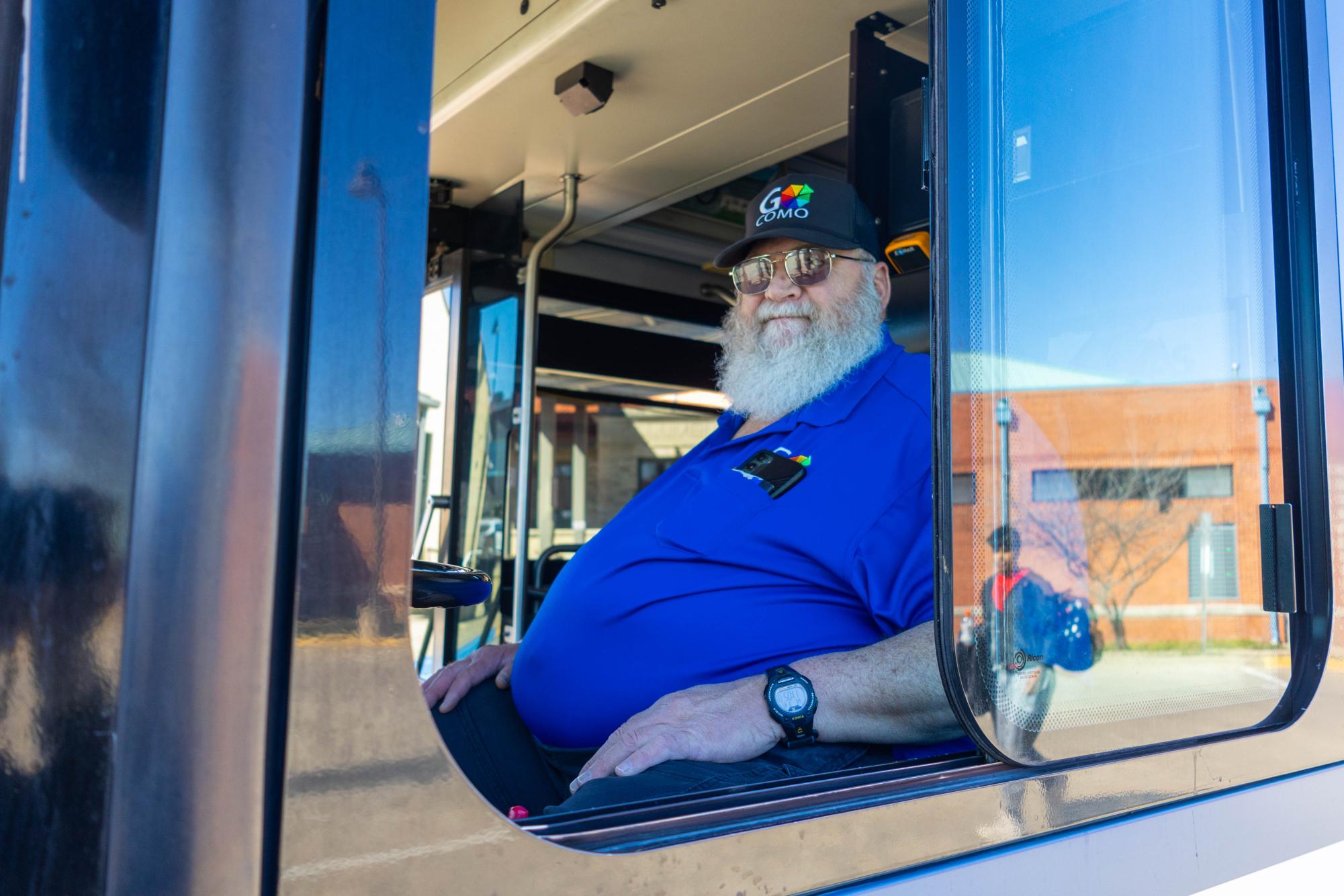
“We chit-chat, they tell me how they’ve been doing,” Mountain said. “Some of them, the first time I was gone for a while, (a regular) thought I quit.”
Driving a city bus requires patience, attention and the ability to adapt. There’s a rhythm to it, Mountain said, made interesting by the people around him.
“Most of them are good people, I’ve been around them enough times,” Mountain said. “They know me, I know them. And when I start driving, I have a peaceful ride, I don’t have much trouble.”
After years of late-night routes and early-morning paths, Mountain feels more comfortable in a bus than in his own car. There is familiarity in the headlights cutting through the early morning dark, interior lights glowing at night as the last riders head home and the steady blink of a turn signal.
Every day, he carries hundreds of people across town: students, nurses, workers and residents, each absorbed in their own destinations. Most will never think about the calculations happening in the driver’s seat. But without him and other drivers like him, Columbia would stall.
“Other people’s gonna get places,” Mountain said. “So we got to keep it going as sensible as we can. It gives and takes.”