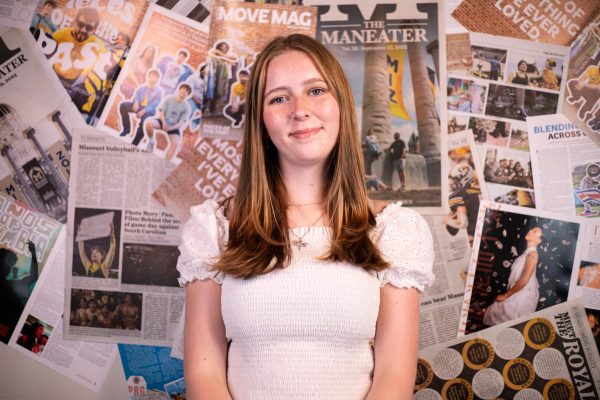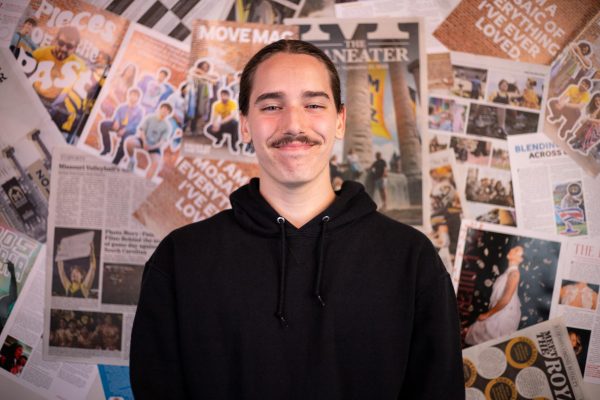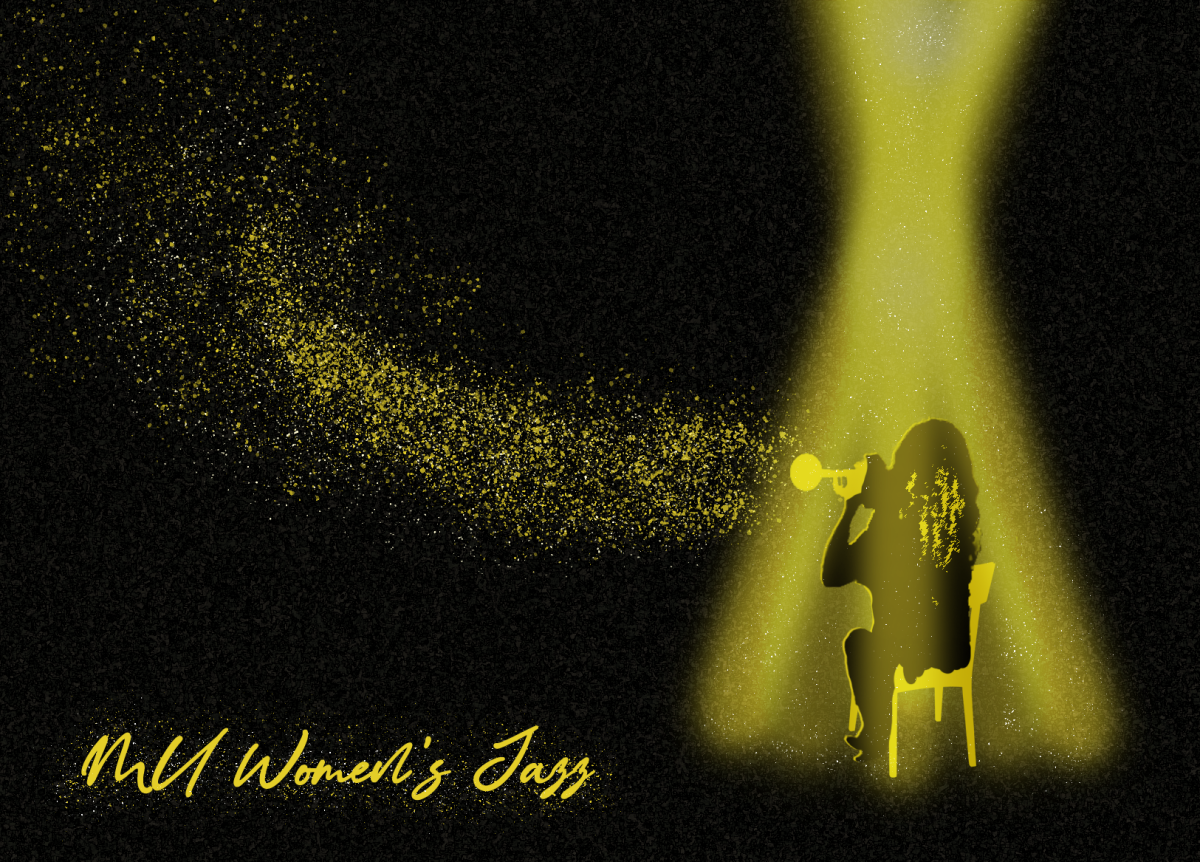
Maia Trotter pushes the slide on her trombone. The instrument emits baritone notes in harmony with the trumpet, played by Katy Miller.
Together, Trotter and Miller, along with about 20 other women, create musical art in the MU Women’s Jazz Ensemble.
The group was started three years ago, when Joanna Griffith, coordinator of community outreach and marketing for the School of Music, saw a need for a space where women could get together and play jazz.
Griffith started playing jazz music in middle school. In high school, she was one of the few girls playing an instrument in a jazz ensemble, and in college, she was the only one.
In the male-dominated jazz environment, Griffith wanted to provide a space for women to play music together.
“When you go to see a jazz band, the majority of the members will be men, but there are a lot of women playing jazz that just don’t keep going for whatever reason,” Griffith said. “So I think it’s important to just come together as a group and we get to have this bond of being women playing jazz.”
One of the ensemble’s first concerts was in honor of Women’s History Month, where they performed music by women composers. While they have since started playing music from a larger variety of composers, the annual March concert remains part of their schedule.
Jazz is a unique style of music — one of the few to originate in the U.S. It started in New Orleans, Louisiana, in a largely Black community, but it has grown significantly since then.
According to Griffith, what makes jazz special is the improvisation and creativity involved with playing that music style. For Miller, it is the spontaneity.
“As a performer, my favorite part of playing jazz music as opposed to like classical music is that each performance is going to be entirely different,” Miller said.
For Trotter, it’s the togetherness of a jazz performance that stands out.
“With a lot of jazz performances, you can watch the director, they’ll start the song and walk away,” Trotter said. “And the jazz band just stays together the entire time. Like, they’re feeling it together, which I think makes it really special.”
In the Women’s Jazz Ensemble, the bond musicians have extends beyond the instruments and into a shared experience of being a woman in a male-dominated field.
“Those rehearsals are so supportive,” Trotter said. “Everybody cares about each other so much because we’ve all experienced being like one of three girls in a 20 person jazz band. Like, we’ve all lived that and now we get to come together and support each other. And it means a lot.”